



Contents:
Most organisations use the cloud today. Indeed, a 2026 multi-country survey found that over 80% of firms run workloads in these environments.
Private and public clouds hold vast repositories of valuable data. They are also where a lot of work gets done nowadays, for example, when using cloud apps to manage projects, process invoices or collaborate. For criminals wishing to steal information or deploy ransomware that disrupts business, the cloud is a very attractive target.
At Heimdal, we continually monitor the latest trends, publications and industry reports into cloud breaches, attack types and challenges. This rundown of cloud security statistics for 2026 will give you an insight into the size and scale of the issue this year.
What are cloud security breaches?
Before we delve into 2026 cloud security statistics, it’s valuable to have a working definition of what we’re talking about. Cloud breaches include:
- Misconfigurations: Poorly configured environments give threat actors access to sensitive data.
- Poor operational visibility: When you cannot monitor data packets as they move through the cloud.
- Data breaches: Poor access control, compromised credentials or unpatched vulnerabilities in the cloud, allowing criminals to exfiltrate sensitive data.
Read more: Full overview of cloud security risks

The scale of cloud security challenges in 2026
The cloud security statistics below show how big the challenge is for businesses in 2026.
Prevalence of cloud breaches in 2026
The cloud is a major target for cyber criminals.
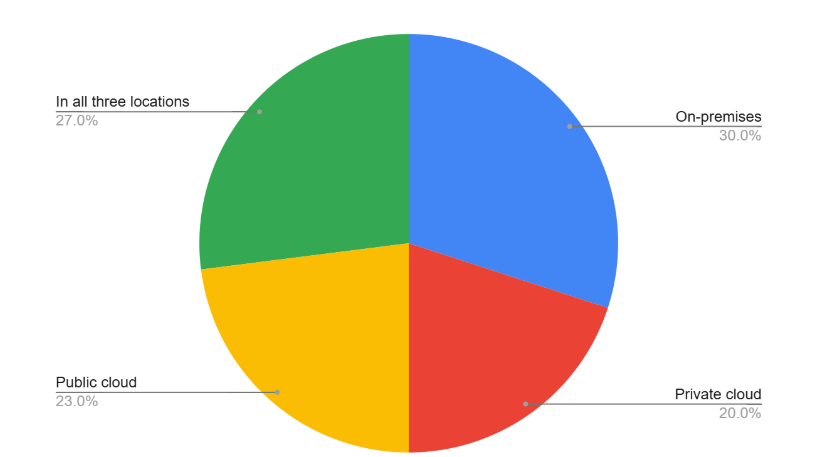
IBM’s Cost of a Data Breach 2026 report categorises data breaches by location. As the pie chart below shows, the cloud – in one form or another – is targeted in 70% of all breaches:
Among companies that use the cloud, security incidents are extremely common. RedHat, a cloud technology company, reports that 97% of organisations have experienced at least one cloud-native security incident in the past year.
And Thales, a consultancy, asked over 3,100 IT professionals about the top cybersecurity attack targets at their organisations. Cloud assets took the top three places overall:
- 35% cited cloud storage
- 34% cited cloud applications
- 32% cited cloud management infrastructure
- 23% cited internal networks
- 21% cited user credentials
- 19% cited identity data
Near-continual attacks
To get an idea of how intensely criminals are attacking organisations, Microsoft’s Digital Defense Report for 2026 provides some fascinating insights.
Their tracking data suggests that between December 2025 and June 2026, there were some 124 million password spraying attacks (almost 700,000 a day) targeting cloud environments. They also identified over 150,000 adversary-in-the-middle phishing attacks and almost 900 device code phishing attacks.
Related: Phishing statistics and analysis for 2026
Types of cloud security risks
Several technology vendors and independent organisations have investigated the main ways that cloud environments get compromised. Because different organisations collect data in different ways, the findings are not always fully consistent. But these cloud security statistics help paint a picture of the state of play.
Identity may be the top cloud attack vector
Most cyber attacks use a variety of methods to enter an environment and extract data. However, Google Mandiant’s 2026 study suggests that threat actors exploit identity issues to gain initial access in 83% of incidents involving cloud and SaaS environments.
Misconfiguration is a major cause of cloud breaches
Misconfigured infrastructure or services are behind 78% of cloud breaches, making it a leading cause of exposure according to RedHat. Misconfiguration creates ‘gaps’ where criminals can access your cloud environment.
Overprivileged accounts are a common weakness
If a user has greater access than they need to company data or tools in the cloud, they are a goldmine for criminals.
Tenable, a cybersecurity company, estimates that 18% of organisations have overprivileged identity and access management (IAM) roles.
This data is mirrored in a survey by the Cloud Security Alliance. Security professionals were asked what they thought the top threats in cloud computing were. In first place was ‘Inadequate Identity and Access Management’.
Excessive permissions are a big source of risk
A closely related issue is that of excessive permissions. This is when users have access to more tools, data or environments than they actually need to do their jobs.
Analysis by Unit 42, part of the Palo Alto cybersecurity company, found that 99% of cloud users have excessive permissions. This makes lateral movement easier if criminals can break into a cloud environment.
What is more, Tenable’s data finds that 65% of organisations have ‘forgotten’ cloud credentials that have ‘critical’ or ‘high’ excessive permissions. If criminals can access these unmonitored accounts, they have almost instant access to vital information.
Even more concerning, Tenable found that 53% of organisations have external accounts that can take on critical excessive permissions. This opens up a pathway for supply chain compromise if a vendor / partner’s accounts get breached.
Read more: What is a supply chain attack?
Other cloud security exposure patterns
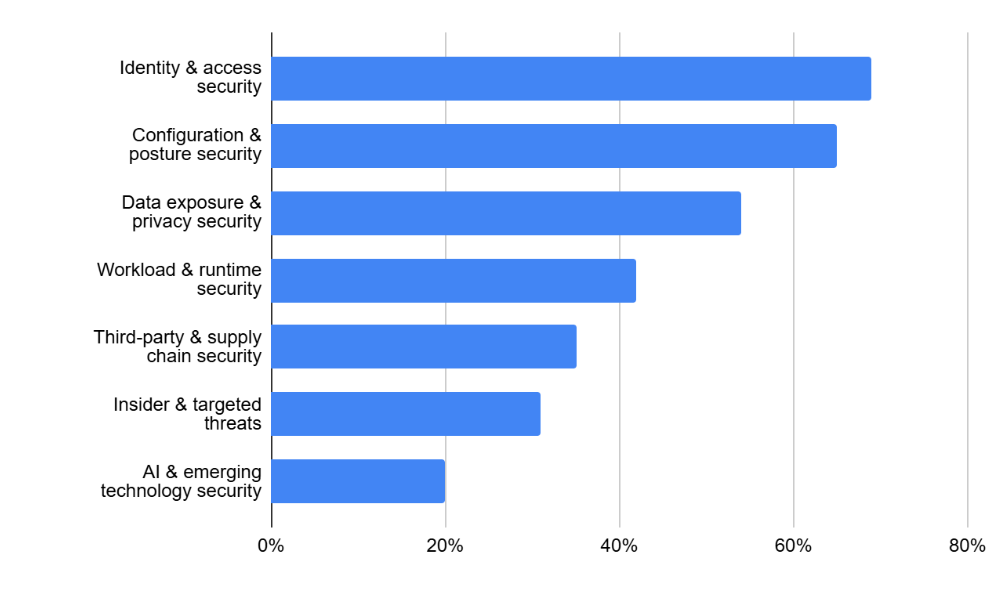
Fortinet, another security vendor, conducted a survey with almost 1,200 cybersecurity leaders. Their data provides an insight into cloud security incidents that organisations have faced this year.
The cost of cloud security breaches in 2026
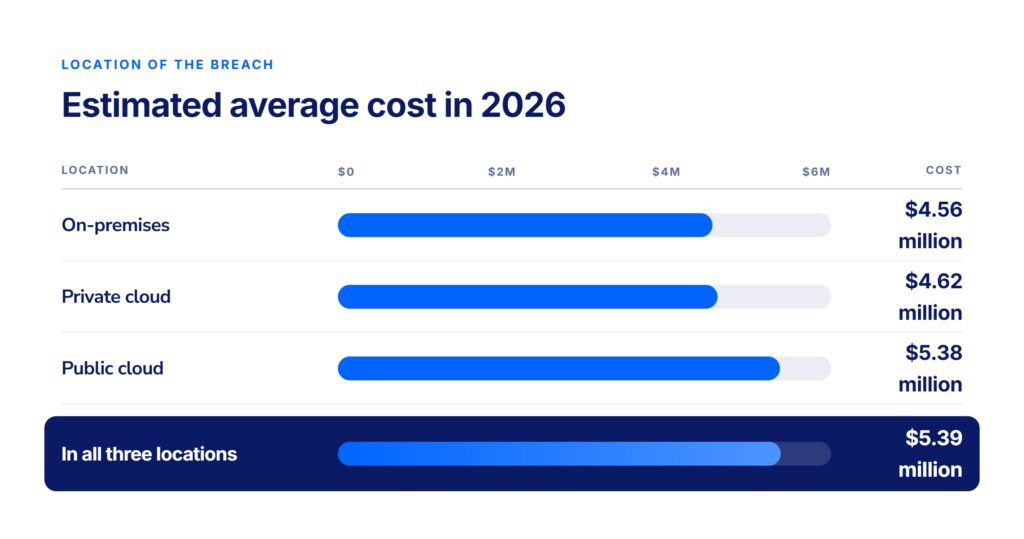
IBM’s Cost of a Breach report estimates that cloud-focused breaches cost organisations more than on-premises breaches.
Wider impacts of cloud security incidents
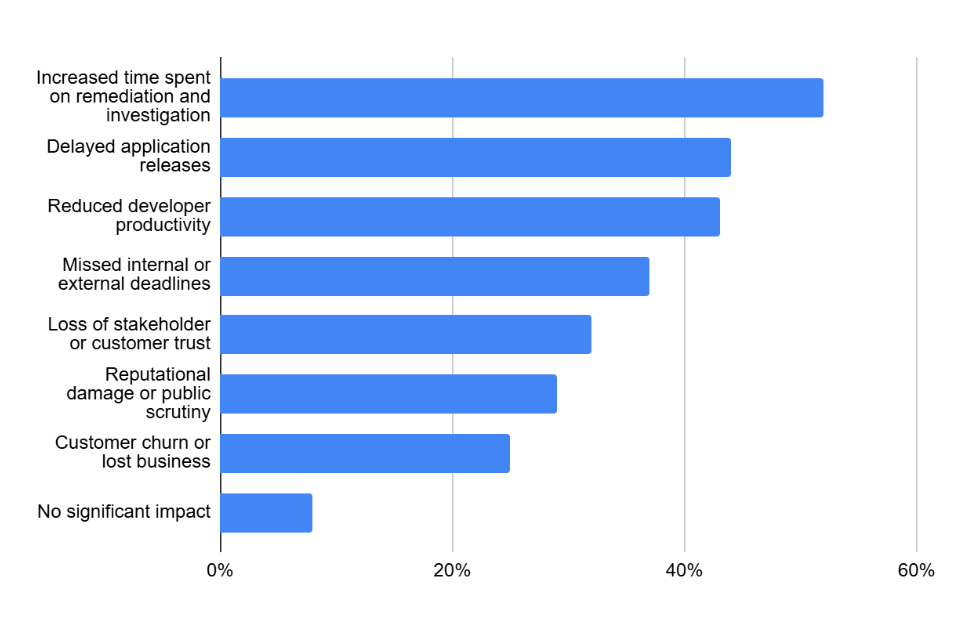
Besides the direct financial cost of breaches, RedHat’s study also looked at some of the wider impacts of cloud-based attacks. As the data shows, the impacts of a cloud breach are far-reaching, impacting how businesses spend time, reducing productivity and damaging trust with customers.
Increasing cloud security spending in 2026
Given the scale of attacks against cloud environments – and the enormous costs of being breached – it’s no surprise that businesses are looking to shore up their defences.
Fortinet’s survey finds that 62% of organisations plan to increase their cloud security budgets in the next year. As it stands, Fortinet’s data suggests that cloud security already accounts for 34% of IT security spending.
Challenges and barriers to better cloud security
As any CISO knows, securing the cloud is easier said than done. Unlike traditional on-premises networks, organisations now have much wider attack surfaces to defend. Most use a range of SaaS apps from different providers. And access is primarily focused on identity, rather than location. Monitoring and securing these dynamic environments is difficult.
In Fortinet’s survey, the top barriers to effective cloud security were:
- Tool sprawl: 69% said tool sprawl and visibility gaps stopped them from monitoring their environments as effectively as they would like.
- Staff shortage: 74% said a shortage of qualified cybersecurity personnel was a barrier to better security in the cloud.
- Speed: 66% told Fortinet that they lack strong confidence in their ability to detect and respond to cloud threats in real time.
Best practice vs reality
Although most businesses that use the cloud are aware of best practice, surveys have found that there’s often a gap between intentions and actions.
For example, RedHat’s study found that 56% of organisations describe their security posture as “highly proactive”. Yet only 39% have a well-defined security strategy. What is more, 22% have no cloud security strategy at all.
Similarly, Thales’ study found that only 47% of sensitive data in the cloud is encrypted. This means that if threat actors manage to enter an unprotected environment, there is nothing stopping them exfiltrating all that data.
AI and cloud security concerns
AI tools are being used to both attack and defend cloud environments. It is still relatively early days in this area of cybersecurity, but RedHat’s survey reveals some important insights:
- 58% of organisations say AI adoption is now a core driver of their cloud-native security planning
- 96% are worried about generative AI in their cloud environments
- 59% lack documented internal AI usage policies or governance frameworks
More data: 2026 ransomware statistics you should know
Staying focused: 2026 cloud security statistics
As our rundown of key cloud security statistics published in 2026 shows, the scale, costs and challenges associated with cloud security are very large indeed.
The vast majority of businesses use the cloud in some form or another, and cyber criminals know it. Securing cloud environments therefore needs to be a priority.
When cloud environments and SaaS apps are well-managed, configured and monitored, the benefits of using the cloud far outweigh the risks. However, managing these environments comes with significant challenges that, without a solid strategy, can leave organisations exposed.
Heimdal’s Managed Extended Detection and Response (MXDR) service gives your organisation a suite of powerful tools that’s supported by a team of experts, monitoring your cloud environments 24/7. Contact us for a demo and learn more about our technologies and managed services.
If you liked this article, follow us on LinkedIn, Reddit, X, Facebook, and Youtube.


