


 Network Security
 Vulnerability Management
 Privileged Access Management
  Endpoint Security
 Threat Hunting
 Unified Endpoint Management
 Email & Collaboration Security



Contents:
Blackpoint is a well-regarded provider of managed detection and response services to the MSP sector. Founded by former NSA employees, their autonomous containment model is highly effective and helps block attacks fast.
But the company’s offerings and approach have certain limitations. If you’re exploring Blackpoint alternatives, this guide is for you.
We’ll be looking at some of the reasons MSPs decide to move on from Blackpoint. And we’ll then explore six Blackpoint alternatives to consider:
- Heimdal
- Huntress
- Sophos
- Guardz
- Kaseya
- Arctic Wolf
The limits of Blackpoint for MSPs
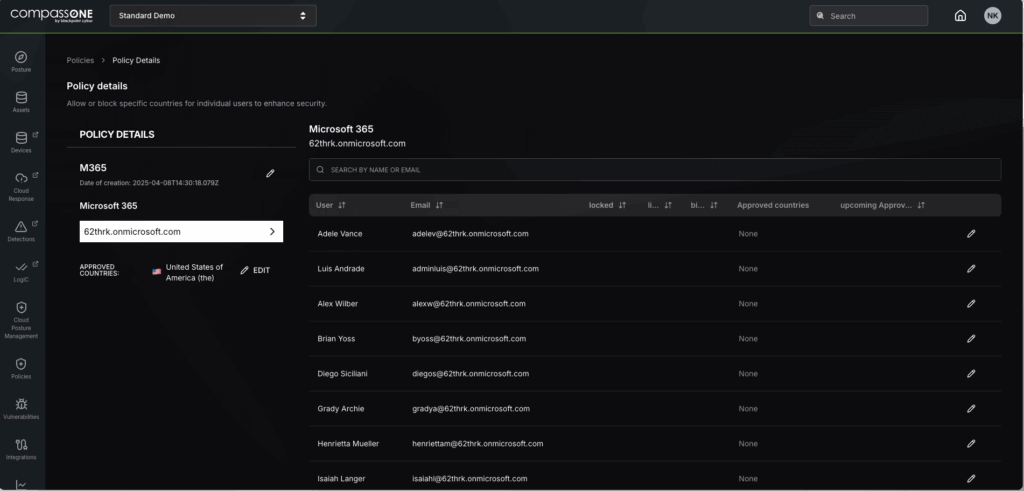
Blackpoint’s core offering is its autonomous containment model. The firm has developed its own XDR which scans not only your endpoints and cloud environments, but also a network map. This helps identify unusual activity in your network – including signs of lateral movement.
If anything suspicious is detected, Blackpoint will immediately lock it down before letting you know (that’s the autonomous part). Rather than simply emailing you when a potential breach has happened, Blackpoint stops it for you. That’s really valuable for MSPs who don’t have a 24/7 SOC.
There is no question that this is a solid solution. Yet there are a few reasons MSPs start looking beyond Blackpoint. Here’s what we hear from MSPs and MSSPs we speak to:
- Detection limits: Blackpoint’s XDR is not the most comprehensive. It doesn’t cover Linux servers, firewalls or SaaS tools from many third parties.
- Just one more security tool: Blackpoint covers an important part of your security offering. But it doesn’t cover everything. You’ll still need a separate antivirus, patch management tool, data backup solution, ransomware encryption tech and so on.
- Relatively high pricing: Although Blackpoint don’t publish their pricing, online reports estimate somewhere between $8 and $15 per endpoint per month. Add this on top of your managed service fee, and it can get expensive for customers.
What should you look for in Blackpoint alternatives?
MSPs start looking at Blackpoint alternatives for different reasons. If price is your motivating factor, your priorities will differ from those of an MSP seeking an MDR that monitors third-party SaaS apps.
But here are a few things we’d recommend thinking about.
What their XDR does and doesn’t cover
Make a list of the endpoints, operating systems or apps you need to monitor for your clients. Verify that your chosen provider does indeed cover all those systems. For example, if you’ve onboarded a few new clients who use Linux, Blackpoint wouldn’t monitor that OS (unless you pay extra for CompassOne which in 2026 had a Linux agent added). Before signing on the dotted line with a new provider, make sure they do cover everything you need.
Like-for-like or cybersecurity platform?
If you’re looking to replace Blackpoint, you have two broad options. You either replace it with a like-for-like point solution, or choose a complete cybersecurity platform.
Point solutions tend to be very strong in one specific area, with no vendor lock-in. However, as you’ve likely discovered with Blackpoint, there are limits to what they can do. You’ll still have to invest in tools by multiple other vendors to cover what the individual tool can’t do. Another downside of this model is the lack of communication between tools. This can slow down incident response.
The alternative is to use a cybersecurity platform that gives you multiple security tools from one provider, on one platform. You simply pick and choose which additional products you want to add to your MSP’s offering. To get the most out of this model, you’ll need to do a wholesale migration of all your security tooling.
How the alerting/blocking system works
A big part of the appeal with Blackpoint is that their security team is 24/7 and proactive. They will freeze user accounts or lock devices autonomously if they suspect something dangerous is happening. They then tell you about it.
If this is something you value, then you’ll want a provider who also offers this level of autonomous management.
That being said, you may actually find that Blackpoint closes things down too frequently. A possible reason for that is a lack of knowledge of your customers. If you’d prefer to just receive alerts of suspicious behaviour to investigate yourself, find a vendor that offers this more hands-off approach.
Pricing
Cost isn’t everything, but many MSPs are understandably price sensitive. Most vendors don’t publish their pricing online, so you’ll have to do some sleuthing on message boards or contact them directly for an estimate. However, some do provide quote generators or calculators that can give you an idea of likely pricing.
You’ll also want to check how fees are calculated (by endpoint, by user, by data volume?).
Besides the upfront cost, you will also want to investigate what’s actually included in the fee:
- What are the SLAs?
- What kinds of reporting are offered?
- Do you get a direct line to an account manager/the SOC?

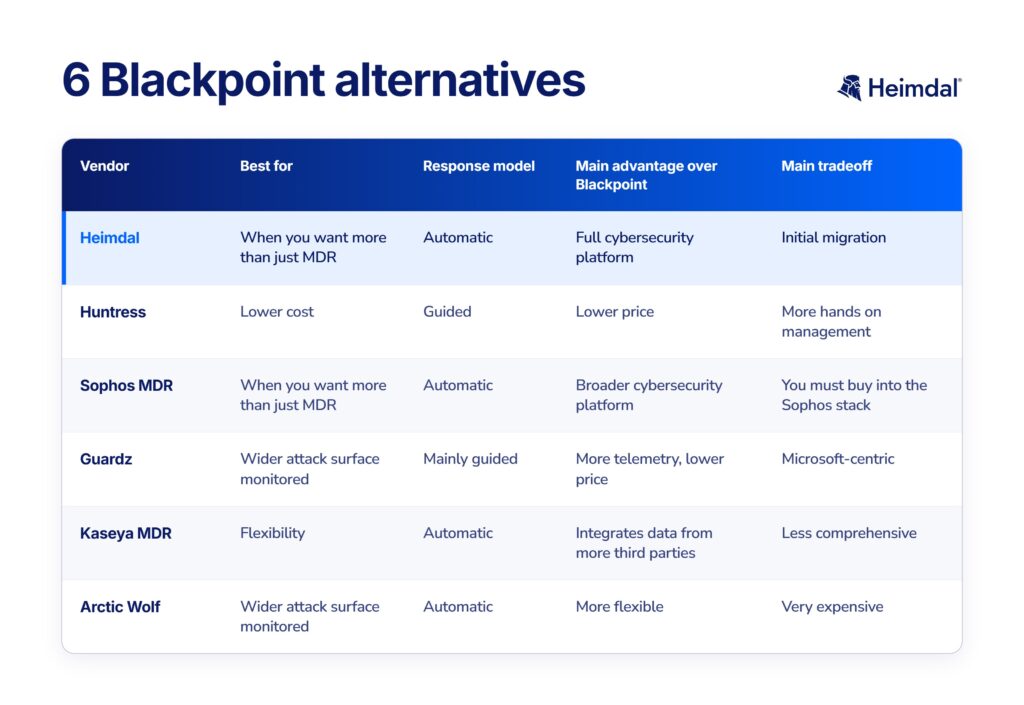
6 Blackpoint alternatives for your shortlist
Blackpoint is hardly unique in offering an MDR service to MSPs. There are dozens of companies offering similar core products and services. However, the following six providers are especially strong.
1. Heimdal
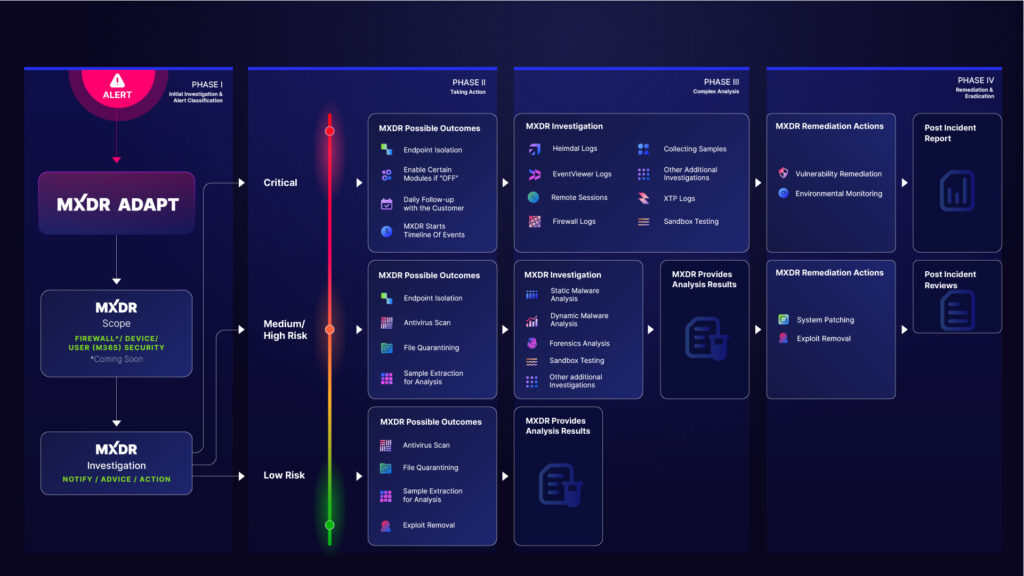
Heimdal’s MXDR is a truly comprehensive cybersecurity platform. Like Blackpoint, it provides you with a 24/7 SOC that’s staffed by highly-experienced engineers. Also like Blackpoint, Heimdal have built their own well-regarded XDR solution that can monitor all your endpoints, cloud apps, servers and OS’.
The big difference is in the range and breadth of Heimdal’s coverage. As well as an XDR, Heimdal’s SOC also uses a swathe of in-house tools for PAM, network security, email and collaboration security. The platform is modular and lets you add other Heimdal security products from their suite. You can pick whatever you need, from next-gen antivirus to DNS security.
Pricing: Not published online, but Heimdal’s self service calculator will give you an accurate estimate based on your input.
Main advantage over Blackpoint?
Heimdal’s MXDR is a good option if you want more than ‘just’ MDR. Rather than having to wield point solutions from multiple different cybersecurity providers, you get everything in a single platform. That means more time focused on your business, less time dealing with endless dashboards and logins.
And the tradeoff?
To make the most of a more comprehensive platform like Heimdal, you’ll want to go ‘all in’ with the vendor. If you already use several other cybersecurity solutions on top of Blackpoint, migrating can be a big job (at least to begin with).
2. Huntress
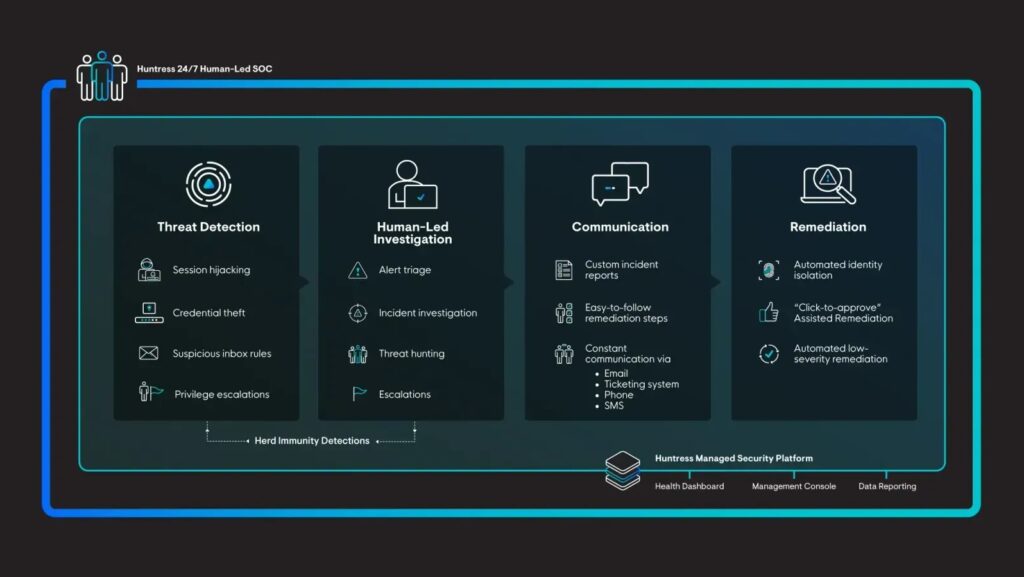
Huntress offers a Managed EDR service that monitors for suspicious behaviour. Like Blackpoint, they have a SOC that’s staffed 24/7 by a team of security analysts.
Huntress’s approach is a bit less active than Blackpoint’s. They won’t usually automatically stop the attack in its tracks. Instead, you’ll get a notification with step-by-step advice on what to do. This is a lower-touch service than Blackpoint, but you will pay considerably less as a result.
Huntress have always pitched themselves as an SMB-focused brand. They’re a good partner for small MSP teams who work with small and medium sized businesses.
Pricing: Huntress is reported to cost around $2.50 per endpoint for MSPs – roughly a quarter of the price of Blackpoint.
Main advantage over Blackpoint?
Huntress is a good alternative to Blackpoint if you want a similar service, but at a considerably lower price. Particularly for small MSPs, that means you can charge clients less or reduce your expenses.
And the tradeoff?
You will need to be a bit more hands-on with your security operations. In most cases, Huntress won’t close down threats for you. So, you’ll have to be confident with your ability to manage breaches by yourself.
3. Sophos MDR
Sophos’ MDR is built on top of Intercept X (their EDR) and also pulls signals from other Sophos security products – including their firewall, email, cloud and identity solutions. The managed service means Sophos’s AI agents and human analysts can respond automatically to threats (although you can also request notification-only or authorise-only response too).
Pricing: It’s fairly expensive. Online reports estimate around $12 per user per month. This is roughly comparable to Blackpoint.
Main advantage over Blackpoint?
Similar to Heimdal, Sophos’ MDR gives you more security tools on top of ‘just’ the XDR solution. If you want to shift to more of a comprehensive platform, this is an option.
And the tradeoff?
You do have to buy into the Sophos security stack. Although many of their solutions are world-class, features like PAM and vulnerability management leave a lot to be desired. And while it is possible to integrate other tools from third party providers, it’s pretty clunky.
4. Guardz
Founded in 2022, Guardz is a relative newcomer when it comes to MDR for MSPs. Nonetheless, it’s received generally positive reviews on comparison sites and could be a good Blackpoint alternative for some businesses.
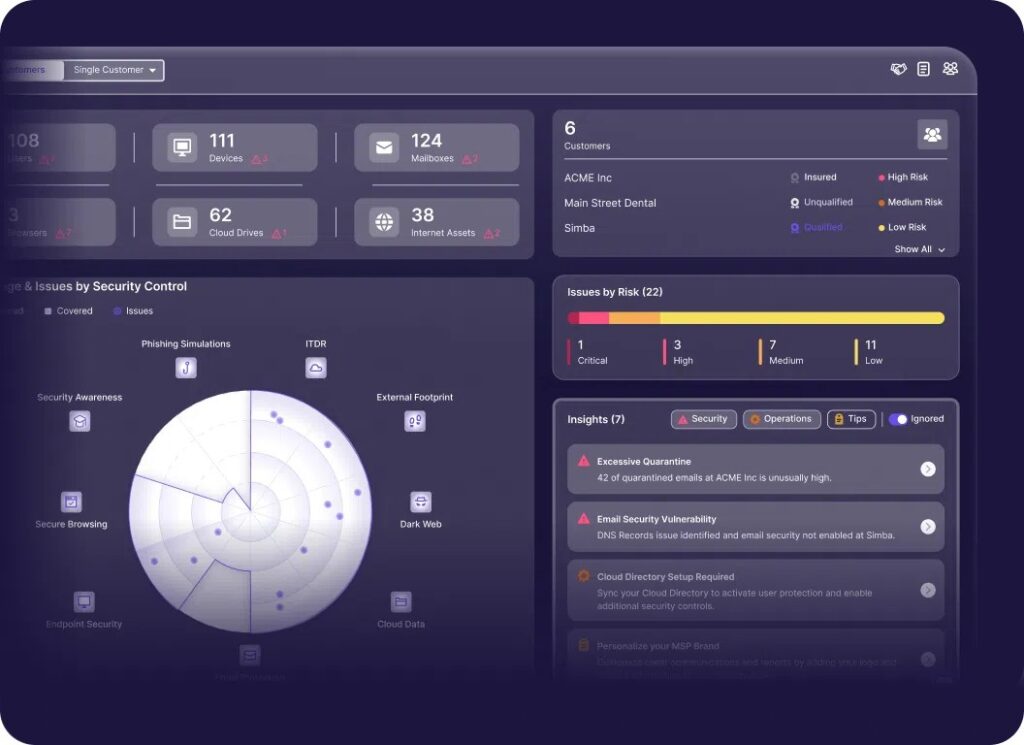
Their offering combines an EDR agent (built on top of SentinelOne), email security and identity powered by a 24/7 SOC and agentic AI. While they can automatically fix some kinds of security issues, the level of autonomy is much lower than with Blackpoint.
Pricing: Not publicly available. The firm uses a tiered model, including one free tier. They calculate pricing on a per-user basis.
Main advantage over Blackpoint?
Because Guardz pulls in telemetry from a wider range of sources, it arguably covers a wider attack surface, although less than Heimdal or Sophos. Pricing isn’t published, but Guardz’ focus on the SMB market suggests it’s likely to be more affordable.
And the tradeoff?
Fundamentally, Guardz MDR offers quite a similar service to Blackpoint. It’s questionable whether migrating will give you a significantly different experience. Guardz is also heavily skewed towards Microsoft environments. If your clients use Google Workspaces, it’s less relevant.
5. Kaseya MDR
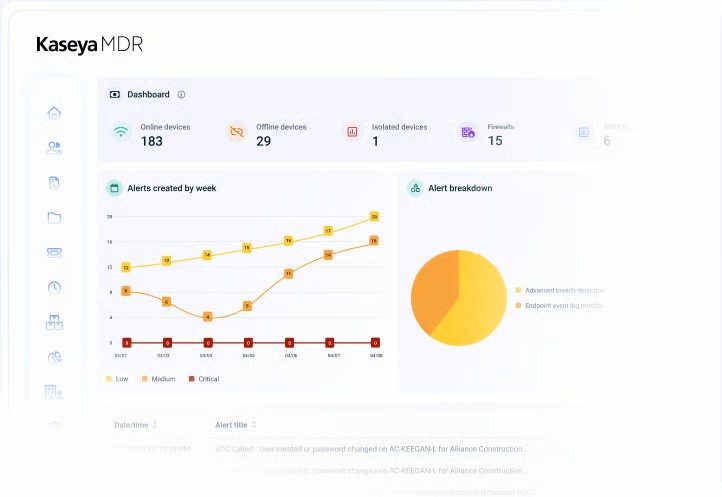
Only launched in 2026, Kaseya MDR is a new entrant into the MDR field, built on the brand’s successful EDR and SIEM. You get a US-based, 24/7 SOC that is AI-enhanced. Just like Blackpoint, Kaseya’s SOC will handle containment for you without your direct intervention.
Pricing: As with Guardz, Kaseya hasn’t published pricing details online.
Main advantage over Blackpoint?
Kaseya’s approach is simply more flexible than Blackpoint’s. If you are already using a third-party EDR/XDR, then Kaseya’s MDR can integrate it and provide the same managed service. Compare that to Blackpoint, where you must use their proprietary XDR.
And the tradeoff?
Blackpoint’s autonomous response process is simply a lot more comprehensive than Kaseya’s. While age isn’t everything, Blackpoint’s MDR has also been around much longer and is really tried and tested.
6. Arctic Wolf MDR
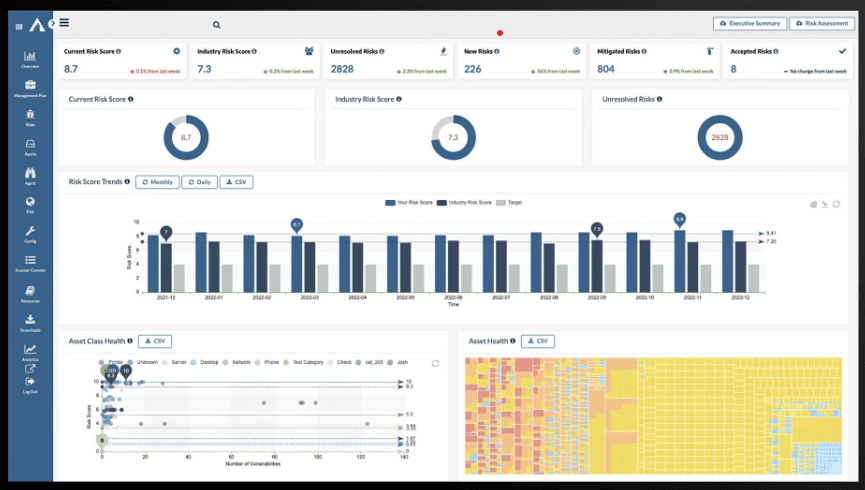
Our final Blackpoint alternative is Arctic Wolf. Like Blackpoint, it offers a 24/7, AI-enhanced SOC that can automatically respond to threats. The company’s open XDR architecture allows them to draw in telemetry from a wide range of other security apps, while also providing their own Aurora endpoint security tool.
Pricing: It’s one of the more expensive options – you can expect to pay between $8 and $25 per endpoint or user per month, according to reports.
Main advantage over Blackpoint?
Arctic Wolf’s Concierge solution is fairly unique. You get dedicated security experts who have a deep understanding of your business’s technology stack, context and needs. That’s reassuring generally, and may also avoid false positives caused by misunderstandings about ‘normal’ activity.
And the tradeoff?
The price, more than anything. If your MSP is growing fast, or if you work with large customers with thousands of seats, then it’s a good option. But for smaller shops, it’s less appealing.
Start building your shortlist of Blackpoint alternatives
There are many MDR providers out there who offer similar services to Blackpoint. However, when you’re choosing Blackpoint alternatives, you don’t simply want a like-for-like swap. There’s no point in changing for more of the same.
The Blackpoint alternatives listed in this guide include a range of providers who give you an MDR, but also something more. Some offer additional tools, a different business model, or notably lower pricing.
At Heimdal, we’ve engineered a powerful, comprehensive cybersecurity platform that includes an MDR service, as well as a wide range of other tools. Learn more about Heimdal’s MXDR today. Want to add it to your shortlist? Contact us for a demo to see if it would work for you.
FAQs
How to choose a Blackpoint alternative?
To choose a Blackpoint alternative, first create a complete list of the kinds of endpoints, cloud apps, networks and operating systems you need to monitor.
Next, consider your budget – how much do you want to spend? Also, think about the level of service and alerting you want. Would you prefer a provider who handles it all for you, or would you be happy to triage and investigate alerts yourself?
Finally, think about how open you’d want your MDR provider to be. Are you happy to go all-in with one company’s ecosystem, or do you want the flexibility to use tools from different security companies?
What is the best Blackpoint alternative?
There is no single ‘best’ Blackpoint alternative. It depends on what your MSP needs. If you want a simple like-for-like switch, then something like Huntress offers a similar offering but at a lower price point.
But if you want an alternative that does something more than ‘just’ MDR, then a comprehensive cybersecurity platform like Heimdal MXDR is the way to go.
Why search for a Blackpoint alternative?
There are a few common reasons businesses cite for leaving Blackpoint.
One is the limits to what Blackpoint’s XDR solution covers. Some operating systems, SaaS apps and certain kinds of OT/IoT aren’t monitored, which could open up your customers to breaches.
There is also the issue of tool complexity. Many MSPs find they are drowning in point solutions from different vendors – including Blackpoint. If MSPs can find a simpler way of managing all their tools in one place, this can be very attractive.
Finally, cost is also a factor. Blackpoint’s pricing is relatively expensive.
If you liked this article, follow us on LinkedIn, Reddit, X, Facebook, and Youtube.


