


Contents:
Whether staff are manipulated to open email links, hand over login details on phone calls, or get tricked by legitimate-seeming texts, social engineering tactics give malicious actors direct access to some of your most important data and systems.
In 2026, multiple studies, surveys and industry analyst reports reiterate what most security professionals already know: people remain the weakest link in most organisations’ cyber defences.
To keep our customers ahead of new threats, at Heimdal we monitor emerging social engineering research.
So, we’ve broken down some of the most important social engineering statistics from reports published in 2026.
Defining what social engineering is in 2026
At its simplest, social engineering is any act that uses psychological manipulation to trick people into exposing private or confidential information. While scams and confidence tricks have always existed, this kind of crime has evolved rapidly with the rise of information technology.
And in 2026, social engineering is more sophisticated, and easier to do, than ever before. This kind of crime has moved beyond phishing emails with poor spelling, to include a wider variety of techniques:
- Smishing (scams sent via SMS)
- Vishing (using phone calls to get people to hand over data)
- AI-powered phishing (the ‘classic’ email scam, now turbocharged by large language models)
- Impersonation (often using ‘deepfake’ technology to create videos or voice recordings to convince victims to hand over money/data)
When we talk about social engineering statistics, we are referring to all of the above techniques – and more.
Read more: The evolution of social engineering

Statistics on the volume of phishing in 2026
It is tricky to estimate the exact volume of phishing that has happened this year. Many victims remain unaware that they’ve been tricked, or may not report it. However, there are some studies that give us a sense of the scale of this problem.
Perhaps the most authoritative source here is the Anti-Phishing Working Group (APWG), which collates global data from a variety of partners.
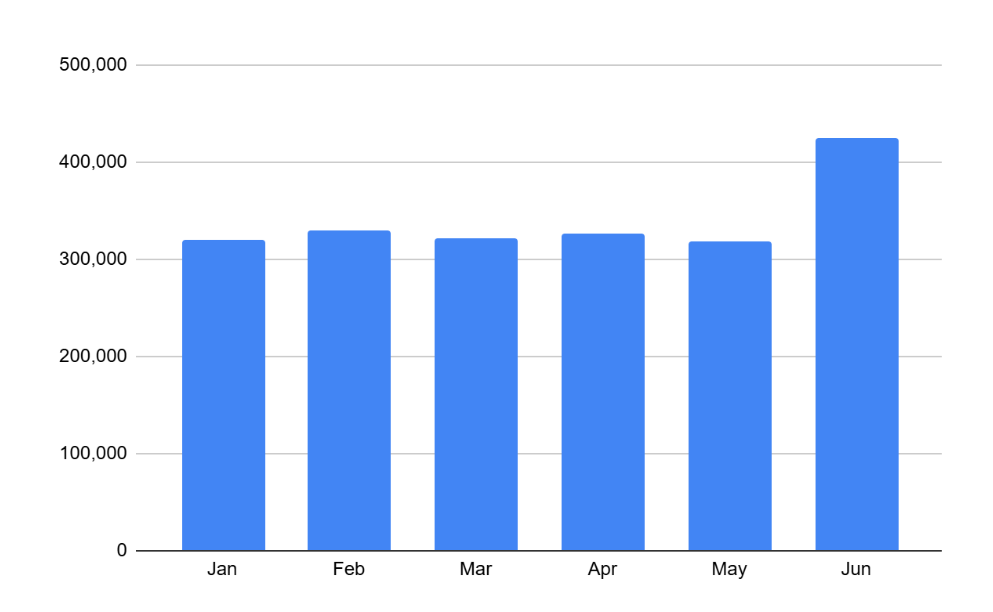
Their data suggests that in the first six months of the year, there were 2,044,863 unique phishing URLs. That means websites where victims will follow links to from dodgy emails.
Collating data from their Q1 and Q2 updates, we can see that June was the most active month for new phishing URLs, with some 425,000 new sites detected. While these numbers are high, they are broadly in line with APWG figures from the past five years.
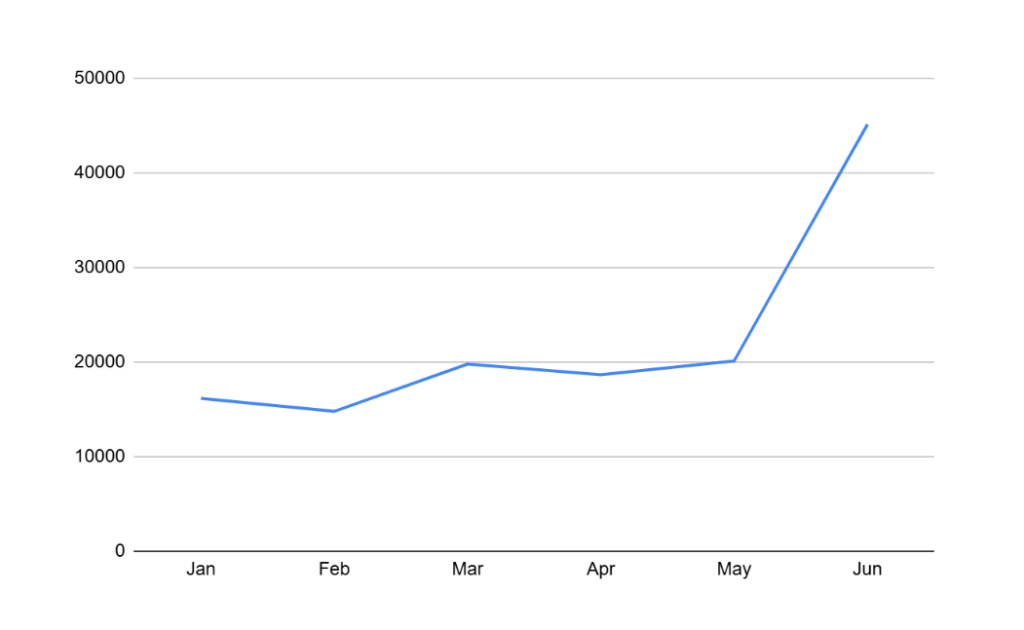
Another way of assessing the scale of the problem is in the number of unique phishing email campaigns. Again, the APWG’s data is helpful.
This shows us there were about 135,000 email campaigns worldwide in the first six months of the year. The numbers increased significantly in June, reaching over 45,000 campaigns.
Is social engineering increasing or decreasing in 2026?
Different sources paint a different picture of global trends in social engineering. This may reflect variations in how data is collected, sample sizes and regional particularities.
Cybersecurity company CrowdStrike’s 2026 Threat Hunting Report suggests social engineering is increasing this year. Their software has detected a 2x increase in vishing intrusions in 2026 and a 15x increase in monthly device code phishing attempts.
Similarly, Mimecast, another cybersecurity firm, also reported that 53% of respondents to their State of Human Risk 2026 survey had noticed an increase in phishing volume this year.
However, these social engineering statistics are somewhat confounded by the results of other surveys.
The UK government conducts an annual cyber breaches survey with businesses and charities. Its results show that 38% of businesses experienced phishing in 2026, down from 42% in 2024.
Similarly, the number of businesses that have been victims of impersonation breaches – another form of social engineering – decreased from 17% in 2024, to 12% in 2026.
These findings are also mirrored in surveys from other countries.
In Japan, for instance, the number of phishing reports was approximately 730,000, down 40% from the year before (although Japan’s Anti-Phishing Council warns that improvements in AI and a rise in fake URLs suggest this apparent decline should be taken with a grain of salt).
Similarly, in Germany, some 400,000 phishing emails were forwarded to the North Rhine-Westphalia government’s consumer protection agency in 2024. This declined to about 380,000 in 2025.
There are also variations within the social engineering category.
According to Google’s Mandiant M-Trends 2026 report, email phishing declined from 22% of initial infection vectors in 2022, down to just 6% in 2025. That’s the last year for which they have data.
Conversely, voice phishing increased to 11% of primary infection vectors in 2025. EfficientIP, another IT provider, also found that phishing activity declined about 10% in the first half of 2026, compared to the second half of 2025.
Social engineering: a top type of cyber crime
What proportion of all cyber crime does social engineering represent?
Once again, data from different sources is somewhat contradictory. This is almost certainly due to different ways of measuring the various kinds of cyber crime.
In the UK government survey, social engineering is by far the most commonly reported kind of attack. The study says 38% of all businesses had experienced phishing attacks and 12% had dealt with people impersonating their organisation or staff.
By contrast, a relatively low 7% said they’d had devices targeted with malware, and only 3% experienced hacking or DDoS attacks. What is more, 25% of charities, 71% of secondary schools and 98% of universities also experienced phishing attacks.
Similarly, Resilience, a risk management company, reported that in the first half of 2026, over 85% of all cyber crime losses were related to social engineering. The number is up from just under 18% in 2024. According to their study, only 7% of losses were related to technical vulnerabilities in software.
However, Verizon’s 2026 Data Breach Investigations Report finds that social engineering is the third most common kind of data breach, representing just 16% of the total.
Verizon do also note that 62% of breaches contained a ‘human element’, which suggests that victims were manipulated in one form or another. For Verizon, ‘system intrusion’, at 61%, is the top form of cyber crime. Meanwhile, EfficientIP’s data suggests that phishing represents 18% of cyber attacks.
Perception of social engineering risks
Given how widespread social engineering appears to be, it is unsurprising that business decision makers are also concerned about the issues.
A 2026 survey by cybersecurity company Kaseya reports that 68% of IT professionals say social engineering and distraction is the threat vector they are most concerned about (making it the top cause for concern).
Similarly, the World Economic Foundation found that 77% of C-suite professionals believe that cyber-enabled fraud and phishing risks will get worse in 2026.
Who’s being targeted by social engineering?
A handful of studies give us an idea of the kinds of people and organisations being targeted by social engineering scams and attacks.
At the time of writing, there do not appear to be data for global trends in social engineering attacks for 2026.
However, Google’s Mandiant M-Trends report suggests that voice phishing is the initial attack vector in 14% of attacks in the Americas. Meanwhile, email phishing is behind 12% of attacks in EMEA.
Unfortunately, social engineering data for the JAPAC region isn’t included. In all regions, Google Mandiant reports that exploiting software vulnerabilities is the most common attack method.
Social engineering and industry sector
There are interesting variations in the kinds of industries targeted by social engineering attacks. APWG’s data for Q2 2026 provides an interesting insight:
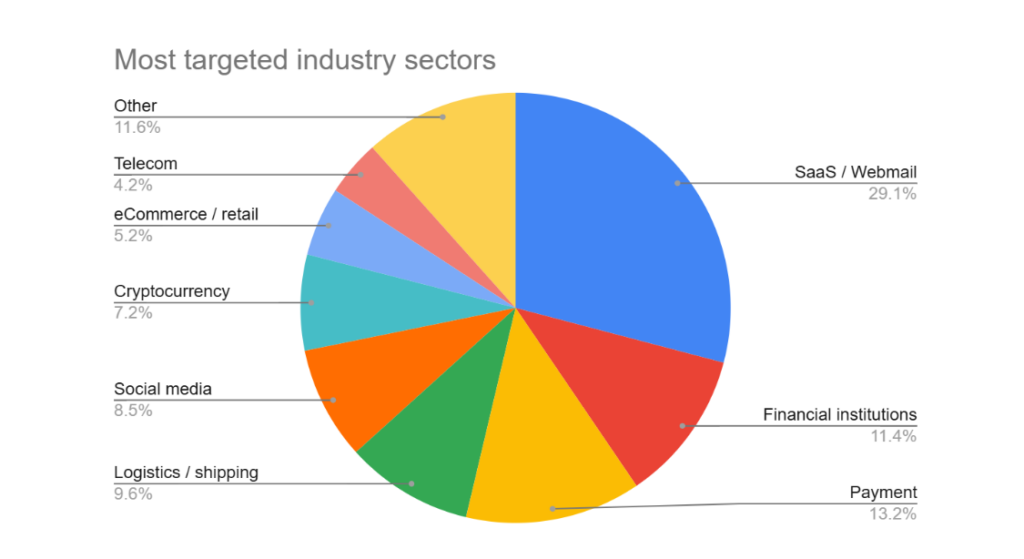
What’s particularly notable is how quickly targets change. In Q1 2026, APWG’s data found that the telecom sector was most targeted (33% of attacks), yet this dropped to just 4.2% in Q2. This indicates that social engineering scammers frequently change their targets.
These findings are also mirrored in EfficientIP’s research. For example, logistics and courier firms received 4% of phishing attacks in 2025, whereas they experienced 13.6% in 2026.
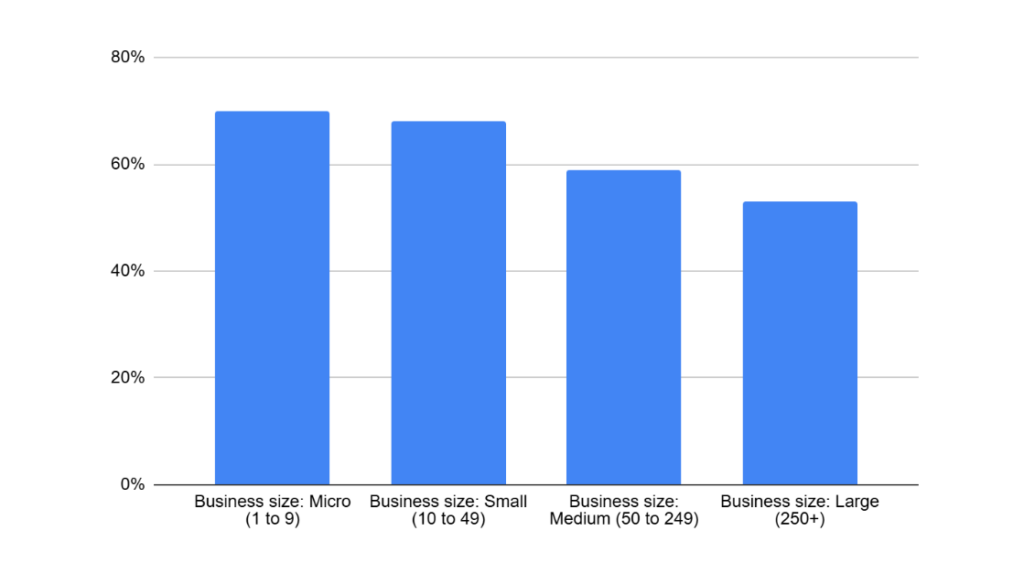
Social engineering and business size
There is also evidence that smaller businesses are most likely to experience social engineering attacks. The UK government’s survey shows that phishing affected micro businesses most often.
AI and social engineering: an emerging threat
This year has seen lots of discussion about the use of AI in cyber crime. When it comes to social engineering, there are several obvious uses – from improving spelling and grammar in emails, increasing the volume of output, and generating video, images and voice messages that can convince people to hand over money or data.
The World Economic Forum’s survey found that 71% of the C-suite are worried that employees will fall for AI-enhanced social engineering. This is certainly a reasonable concern.
However, there is relatively little hard data, at present, about the use of AI in social engineering. Notably, Resilience’s study found no incurred losses from AI-specific attack vectors.
That being said, a survey focusing on the financial services industry by security provider Tandem found that 25% of firms surveyed had experienced a deepfake, voice cloning or AI impersonation incident. Of course, this doesn’t mean people ‘fell’ for the impersonation. But it does indicate that cyber criminals are innovating with these new technologies.
Signs of success are no reason to relax
The fact that more cyber criminals are turning to social engineering is, arguably, a sign of success.
It demonstrates that improved security tooling means that it’s now simply harder for criminals to break into IT environments using ‘traditional’ hacking methods.
They have been forced to engage in more social engineering, which is time and resource-intensive.
However, this is not a reason to be complacent. Particularly with the emergence of AI tools, it is now much easier and faster for criminals to target more people with a variety of social engineering scams.
Everyone – from individual workers to IT teams, MSPs and SOCs – will need to remain vigilant and sceptical to avoid becoming social engineering victims.
If you liked this article, follow us on LinkedIn, Reddit, X, Facebook, and Youtube


