




Patch every endpoint, Windows, macOS, Linux, and 350+ third-party applications, from a single cloud console, on your schedule, without standing up a single server.
IT Manager

IT Services Industry
Fantastic and very cost effective IT security package
"I like that many applications are bundled in one application, making it easy to administrate and very effective. Effective means saving time and money."



Watch Our Short Demo
 Key Features
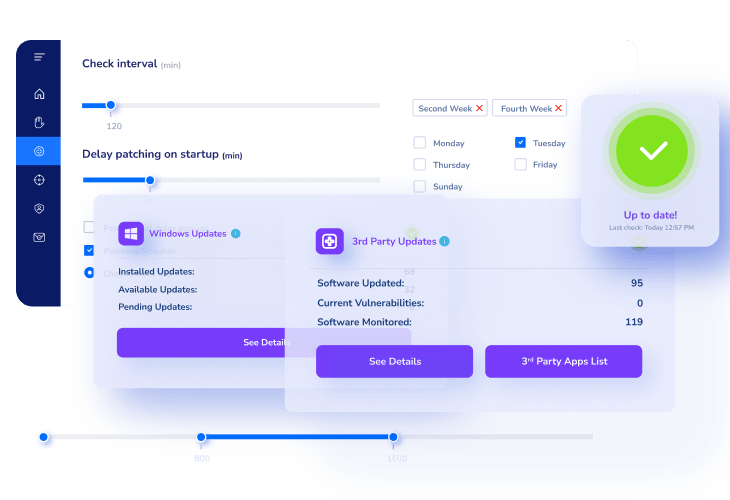
 One cloud console. Every endpoint. No infrastructure required.
 Key benefits
 WSUS was built for a world where every device lived on the corporate network. That world is gone. Remote endpoints, hybrid fleets, and 350+ third-party applications that Microsoft’s cloud tools don’t touch have turned patch management into a manual, time-consuming job with real compliance risk attached. Heimdal is built for the fleet you actually have.

No servers to maintain. No infrastructure to manage.
Heimdal delivers patches via its built-in cloud infrastructure. There are no additional servers to stand up, no sync schedules to manage, and no on-premises components required.
You get the control of a dedicated patch tool without the overhead of maintaining the infrastructure behind it. Local P2P distribution keeps bandwidth usage low during patch windows for environments where that matters.
Audit-ready patch compliance, without the manual effort.
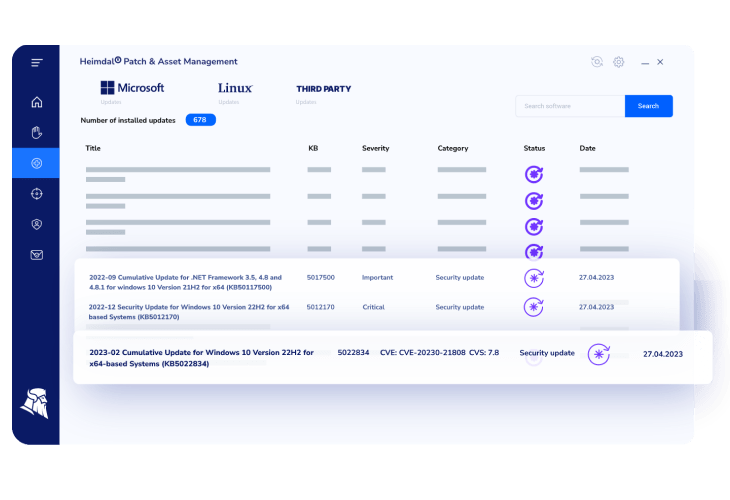
Every patch deployment is logged. Every CVE is tracked. Every system change is recorded. When a compliance deadline arrives — PCI DSS v4.0.1 requires critical-severity patches within one month of release — you have the evidence.
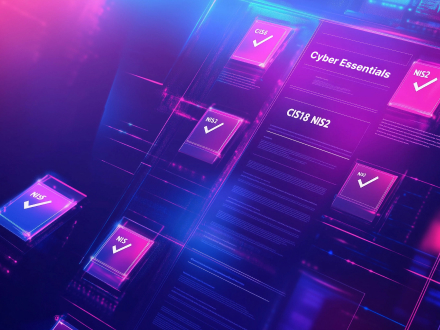
Heimdal's reporting covers CIS18, NIST, Cyber Essentials, and GDPR requirements. Your CISO gets a clean report. Your auditor gets the detail they need.
Full visibility into what's installed and what's out of date.
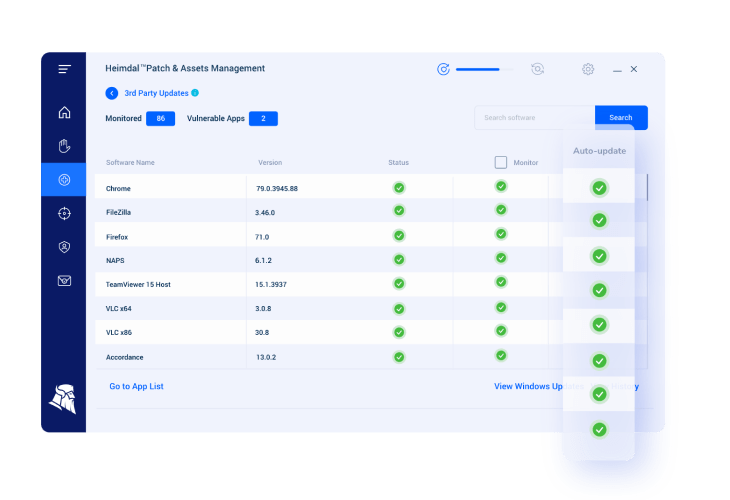
Patching what you know about is the easy part. Patching what you didn't know was installed is harder. Heimdal gives you a complete software inventory across your estate: every application, every version, every device.
You see vulnerabilities sorted by severity, CVE, and type, regardless of operating system. Nothing sits unpatched because it wasn't on the list.
Patch Product Add-On
Your standard third-party applications are covered out of the box. Infinity Management handles the rest. If your patch window starts with stopping a service, running a pre-patch script, or deploying a proprietary in-house application, Infinity Management gives IT administrators the ability to automate those workflows using command-line scripting directly in the Heimdal console. Custom packages are encrypted before deployment and distributed globally via Heimdal's secure content delivery network.
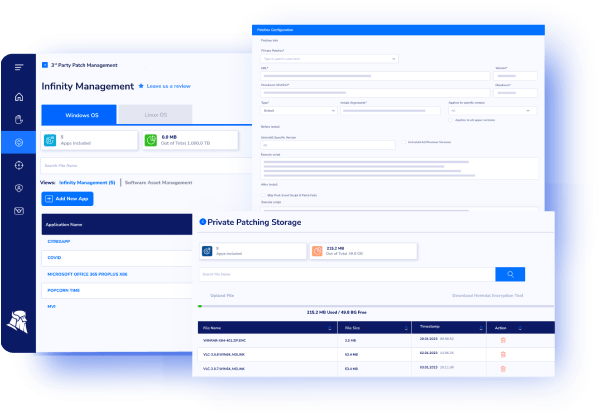
We empower IT teams and MSPs to streamline their patch management process, fortify IT assets, and ensure compliance – all from a single, centralized platform. Get started now.





Cloud patch management means your patching infrastructure lives in the cloud rather than on a server in your building. Patches are tested, packaged, and delivered to endpoints over the internet, without requiring a local update server or a VPN connection.
WSUS works the other way. It downloads updates from Microsoft, stores them on a server you maintain, and distributes them to devices on your network.
That model has three well-documented problems: it requires ongoing server maintenance, it only covers Microsoft software natively, and devices that aren’t on the network don’t get patched. Microsoft deprecated WSUS in September 2024, confirming it will receive no new features going forward.
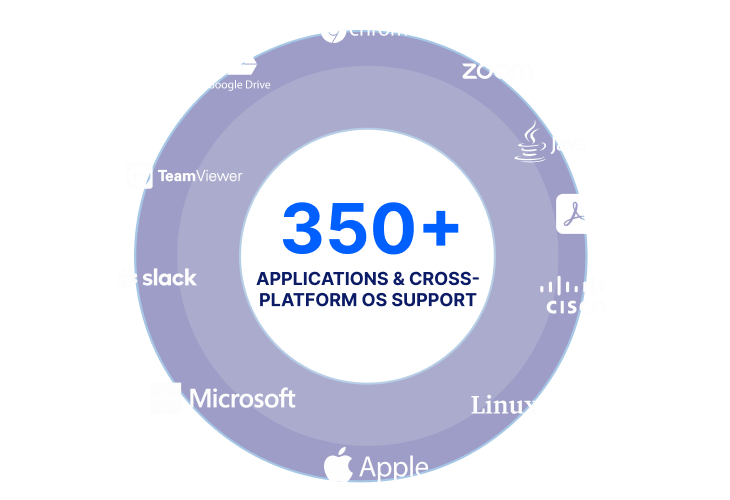
Heimdal’s cloud patch management software deploys updates to any endpoint, anywhere, without on-premises infrastructure. The full application list, OS and 350+ third-party applications across Windows, macOS, and Linux, is covered from a single console.
Yes. Heimdal delivers patches over the internet directly to the endpoint. The device does not need to connect to the corporate network, check in through a VPN, or be present in the office during a maintenance window.
Devices that are offline when a patch is scheduled will receive the update the next time they come online. This applies to remote workers, travelling devices, and any endpoint that operates permanently outside the office.
Heimdal supports automated patching for 350+ third-party applications across Windows, macOS, and Linux. The full list of applications covered is available at the Heimdal support documentation. Common examples include browsers, productivity tools, media players, developer utilities, and security software from third-party vendors.
For proprietary, in-house, or custom applications not on the standard list, the Infinity Management add-on allows IT administrators to automate patching using command-line scripting directly within the Heimdal console.
No. Heimdal’s patch management solution requires no additional servers, no local update infrastructure, and no on-premises components. Patches are delivered via Heimdal’s built-in cloud infrastructure, which supports on-premises, hybrid, and fully remote environments from the same console. A lightweight agent runs on each endpoint. That is all that is required on the device side.
For environments with bandwidth constraints, local peer-to-peer distribution is available. This reduces the volume of external traffic during patch windows by allowing endpoints within the same network to share update packages.
Heimdal tests, sanitises, and repackages every patch, update, rollup, hotfix, and security pack in its sandbox before making it available for deployment. This process is designed to complete within 4 hours of vendor release. Every package is delivered via encrypted tunnels to ensure it has not been tampered with in transit.
Yes. Heimdal gives you configurable scheduling so patches deploy during the windows you define.
You can set different schedules for different user groups, prioritise specific groups for early deployment of critical updates, and configure how the system handles urgent patches that need to go out immediately.
Silent deployment means updates install without interrupting the end user. If a patch causes a problem, rollback is available.
Heimdal keeps a continuous audit trail covering CVE/CVSS tracking, full patch history per device, and system change logs. This data is available for compliance reporting without manual log extraction or spreadsheet assembly.
The reporting aligns with CIS18, NIST, Cyber Essentials, and GDPR requirements. PCI DSS v4.0.1 (the current active version) requires critical-severity patches to be installed within one month of release. Heimdal’s combination of fast deployment and detailed logging supports meeting and evidencing that requirement.
Yes. Rollback is available if a patch causes an issue after deployment. You can revert to the previous state in minutes, without having to manually uninstall the update across affected devices.
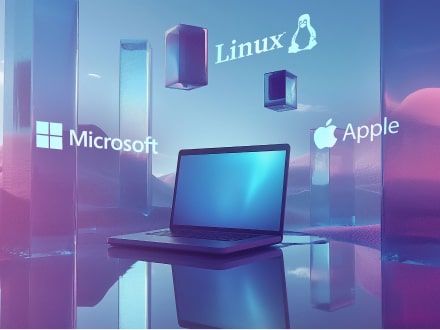
Yes. Heimdal Patch and Asset Management solution supports Windows, macOS, and Linux from a single console with a single agent. OS updates and third-party application patches are managed in the same interface, with the same policy controls and the same reporting. There is no need to run separate tools for different operating systems or maintain different patch policies per platform.
Patch and Asset Management is one module within the Heimdal XDR platform. It runs on the same agent as Heimdal’s other security products, including Threat Prevention, Next-Gen Antivirus, Ransomware Encryption Protection, Privileged Access Management, and Application Control. This means patching data and vulnerability status feed into the same unified dashboard as the rest of your security telemetry.
For organisations running multiple Heimdal products, this removes a common source of tool sprawl: separate patch tools, separate dashboards, and separate reports that have to be reconciled manually. Everything is visible in one place, managed through one agent, and reported from one console.